Introduction to the Hôtel de Ville in Paris
The Hôtel de Ville of Paris is far more than an administrative building; it embodies the very soul of the French capital. Located in the heart of Paris, in the 4th arrondissement, it serves both as the seat of the municipal government and as a symbol of the city’s history and culture. This historic landmark attracts thousands of visitors each year, drawn by its imposing architecture and rich past.
I invite you to discover the many facets of this iconic monument. From its eventful history to its impressive architecture, and the secrets hidden behind its walls, the Hôtel de Ville is truly a treasure waiting to be explored. As you read this article, you will understand why it is so dear to Parisians and lovers of the city alike.
We will also explore the major events that have marked its history, as well as its influence on popular culture. Whether you are passionate about history, an architecture enthusiast, or simply curious, this article is made for you.
History of the Hôtel de Ville: From Its Origins to Today
The first stone of the Hôtel de Ville was laid at the beginning of the 14th century. Initially, it was a simple house purchased by Étienne Marcel, the provost of the merchants of Paris. Over the centuries, this modest residence expanded to become the magnificent building we know today. Each period left its mark on the structure, reflecting the political and social transformations of Paris.
In the 16th century, King Francis I decided to rebuild the Hôtel de Ville in the Renaissance style, entrusting the project to the architect Domenico da Cortona. However, it was only in the 19th century—after a devastating fire during the Paris Commune—that the building was completely reconstructed in its current form, blending Renaissance influences with more modern elements.
Today, the Hôtel de Ville is not only the seat of municipal institutions; it is also a place of memory. It hosts exhibitions, official ceremonies, and cultural events, making it a lively and dynamic space. This constant evolution highlights Paris’s unique ability to combine tradition with modernity.
Architecture of the Hôtel de Ville: A Masterpiece of Art
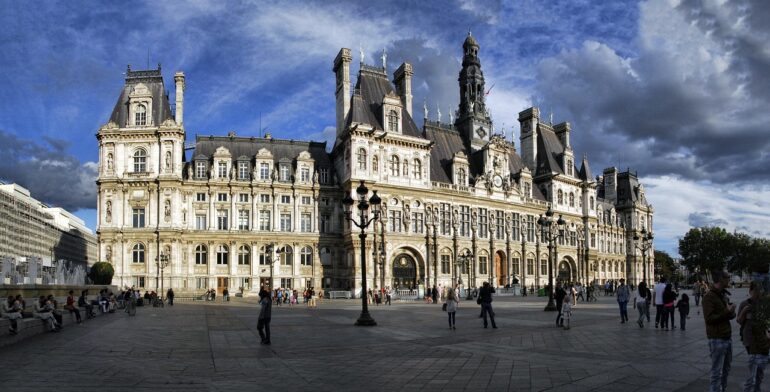
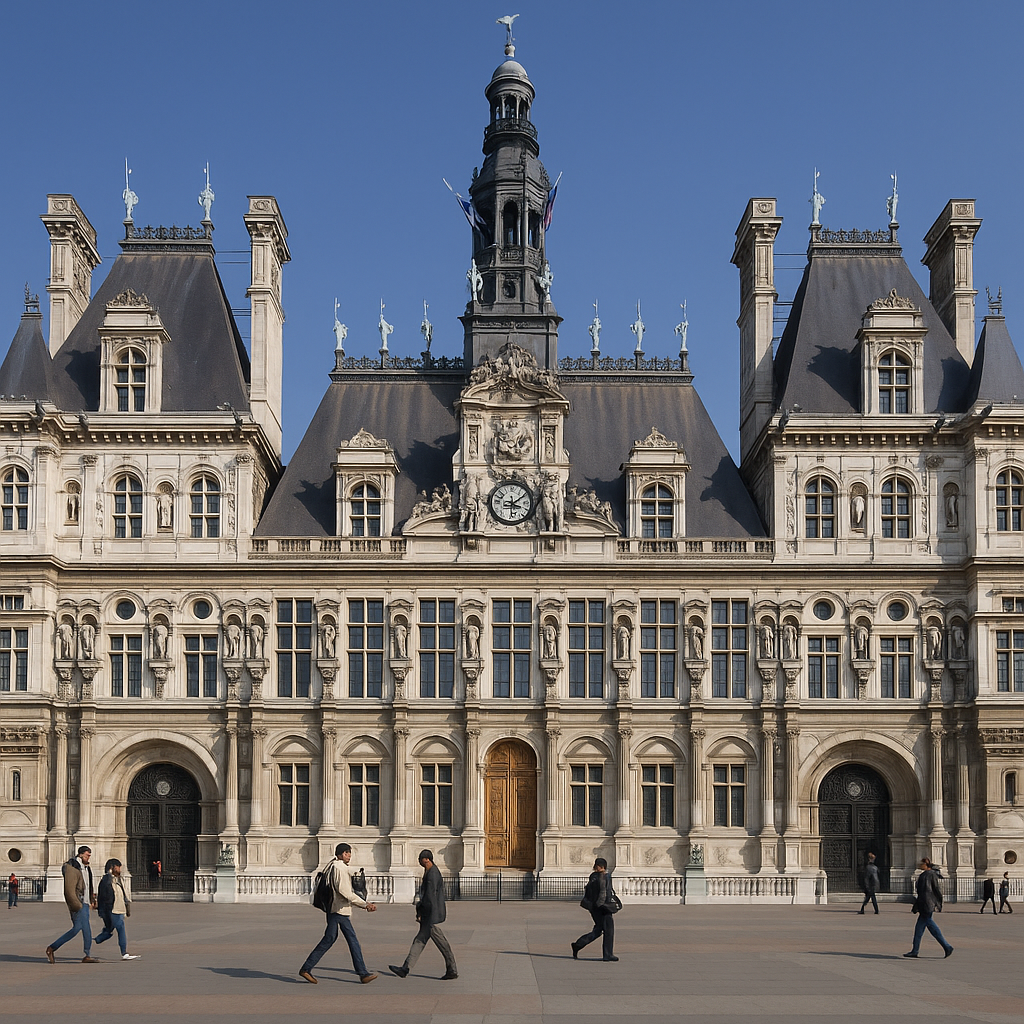
The architecture of the Hôtel de Ville in Paris is a true masterpiece. Its façade, adorned with statues of historical figures and intricate bas-reliefs, reflects the richness of its ornamentation. Inside, the rooms are decorated with an elegance that reflects the prestige of the institution. The magnificent marble staircases, sparkling chandeliers, and mural frescoes all contribute to an overwhelming impression of grandeur.
The architectural style of the Hôtel de Ville is primarily Neo-Renaissance, the result of the 19th-century reconstruction led by architects Théodore Ballu and Édouard Deperthes. Their work harmoniously blended classical and modern elements, creating a structure that integrates perfectly into the urban landscape of Paris.
The beauty of the building is not limited to its exterior. The interiors—such as the ceremonial hall and the council chamber—are true gems. Each room tells a story and reflects the artistic tastes of its era. The architecture of the Hôtel de Ville is a celebration of Parisian art and history, and visiting its interior spaces is an unforgettable experience.
The Iconic Features of the Hôtel de Ville
Among the most iconic elements of the Hôtel de Ville is its famous clock. Located on the main façade, it serves as a landmark for both Parisians and tourists. Decorated with allegorical statues, it symbolizes the passage of time and the unfolding of history. It stands as a reminder of the central role the Hôtel de Ville plays in the daily life of Paris.
Another notable feature is the equestrian statue of Étienne Marcel situated at the entrance of the building. This historical figure, known for his bold reforms, symbolizes the fight for the rights of the people of Paris. His presence before the Hôtel de Ville pays tribute to his important role in the city’s history.
Lastly, the gardens of the Hôtel de Ville—though less well known—also deserve attention. Peaceful spaces for rest and reflection, these gardens offer a quiet retreat just steps away from urban activity. They are an ideal place to recharge while admiring the building’s majestic architecture.
Major Historical Events at the Hôtel de Ville
The Hôtel de Ville of Paris has been the stage for numerous major historical events. During the French Revolution, it served as the nerve center of many political decisions. In 1789, it welcomed the rioters who stormed the building to demand radical reforms. This place witnessed the rise of the ideals of liberty, equality, and fraternity.
Another crucial moment came with the Paris Commune of 1871, when the Hôtel de Ville became the headquarters of the insurgents. This dramatic episode ended with a fire that destroyed the building, leaving a permanent mark on its history. The reconstruction that followed strengthened the symbol of resistance and renewal that the site represents.
More recently, the Hôtel de Ville played a central role during the Liberation of Paris in 1944. It was here that Charles de Gaulle delivered his famous speech, proclaiming victory and the return of freedom to Paris. Each historical event has left an indelible imprint, enriching the heritage of the Hôtel de Ville.
Secrets and Anecdotes Surrounding the Hôtel de Ville
The Hôtel de Ville of Paris is filled with secrets and anecdotes that add to its mystique. Did you know that beneath its foundations lie remnants of ancient Lutetia, the first city of Paris? These ruins bear witness to the capital’s thousand-year history and the continuity of human occupation.
Another intriguing anecdote concerns the underground passages of the Hôtel de Ville. During the Second World War, these secret tunnels were used by the Resistance to escape occupation forces. Even today, these subterranean corridors arouse curiosity and fuel urban legends.
Lastly, the Hôtel de Ville is reputed to host several ghosts. Employees have reported strange occurrences, such as footsteps echoing in deserted hallways. Whether true or not, these stories add a mysterious touch to this already enchanting place.
Visiting the Hôtel de Ville: Practical Information
To visit the Hôtel de Ville in Paris, it is important to be well prepared. Guided tours are regularly organized to allow visitors to discover the building’s history and architecture. These tours are generally free, but it is recommended to book in advance due to high demand.
Access to certain parts of the Hôtel de Ville may be restricted depending on ongoing events and official ceremonies. It is therefore wise to check the event calendar on the official website before planning your visit. Don’t forget to bring an ID, which is often required for entry.
For those who wish to extend the experience, the surroundings of the Hôtel de Ville offer many attractions. The proximity of the Seine, the Marais district, and Notre-Dame Cathedral enriches the visit with diverse perspectives on Parisian history and culture.
The Hôtel de Ville in Popular Culture
The Hôtel de Ville of Paris has inspired many artists and filmmakers over the years. Its grand architecture and fascinating history make it an ideal setting for films and television series. Both French and international productions have shot iconic scenes here, contributing to its worldwide reputation.
In literature, the Hôtel de Ville is often mentioned as a symbol of Parisian strength and resilience. Writers, captivated by its tumultuous history, have woven it into numerous stories, reinforcing its status as a literary monument.
Finally, the Hôtel de Ville is also a gathering place for Parisians during major events, whether sports celebrations or national commemorations. Its place in popular culture is undeniable, and it continues to serve as a point of reference for all generations.
Conclusion: The Hôtel de Ville, a Symbol of Paris
The Hôtel de Ville of Paris is far more than a simple administrative building. It is a privileged witness to the history of Paris, a remarkable architectural masterpiece, and a symbol of the city’s resilience and innovation. Every stone, every sculpture, and every room tells a story, weaving a complex tapestry that connects the past to the present.
Whether you are a longtime resident or a passing visitor, the Hôtel de Ville offers a unique window into the soul of Paris. Its rich history, dazzling architecture, and central role in the life of the city make it an essential destination.
I encourage you to discover or rediscover the Hôtel de Ville of Paris. Immerse yourself in its history, admire its architecture, and let yourself be captivated by its mysteries. Whether your visit is physical or virtual, it promises to be enriching and memorable. Don’t miss this opportunity to connect with one of Paris’s most iconic landmarks.